

Why is it important to develop emotional intelligence? Because children who can name feelings, manage big reactions, read social cues, and recover from stress are usually better equipped to learn, make friends, and handle everyday challenges. If you’ve been wondering why emotional awareness matters at home and at school, the short answer is this: it helps kids understand themselves and relate to other people without getting overwhelmed by every hard moment.
Maybe this looks familiar. Your child melts down over the wrong cup, shuts down after a tough school day, or snaps at a classmate and then can’t explain what went wrong. And if you’re a parent or teacher, you probably don’t need more theory — you need practical ways to develop emotional intelligence in children when real life is noisy, rushed, and messy.
That’s what this guide is for. You’ll learn what emotional intelligence means in child development, how do children develop emotional intelligence over time, and how to help children develop emotional intelligence with routines, scripts, and teaching ideas you can actually use this week. We’ll cover home and classroom strategies, age-by-age examples, simple tools like emotion charts and role-play prompts, and signs that a child may need extra support — because why is it important to develop emotional intelligence if not to make daily life a little calmer, kinder, and more manageable?
Editorial disclosure: Educators Support uses an automated research, drafting, and verification workflow. This article provides general educational information and does not imply human or clinical review.
📑 Table of Contents
- What emotional intelligence looks like
- Why is it important to develop emotional intelligence
- 6 steps to build these skills
- Age-by-age help at home and school
- Tools, mistakes, and when to get help
- Frequently Asked Questions
- How do children develop emotional intelligence?
- Why is it important to develop emotional intelligence in children?
- How can I improve my child's emotional intelligence at home?
- How do you teach emotional intelligence to preschoolers?
- How do you teach emotional intelligence to teens?
- What are 7 signs of low emotional intelligence in children?
- What are the 3 C's of emotional intelligence?
- What are the 4 R's of emotional intelligence?
- Conclusion
What emotional intelligence looks like
So here’s the deal: emotional intelligence is a set of learnable skills that helps children notice feelings, name them, manage them, and respond to other people well. If you’re wondering why is it important to develop emotional intelligence, start here: kids aren’t born with these skills fully formed, but they can grow them over time. If you’re new to emotional wellness for kids and parents, start with our emotional wellness for kids and parents guide for context.
A simple definition parents can use
Emotional intelligence is the ability to notice, understand, express, and manage feelings while also responding to other people’s feelings with care. That’s what is emotional intelligence in child development in plain language, and it matters at home and at school.
At home, it sounds like, “I’m frustrated my tower fell,” instead of, “I’m bad.” In a classroom, it looks like a child noticing a classmate is upset and making space, asking if they’re okay, or waiting their turn.
The four skills underneath it
- Notice: body cues, facial expressions, voice tone, and stress signals. Younger children often borrow adult calm before they can create their own, which is why co-regulation matters so much.
- Name: move beyond mad or sad to words like disappointed, worried, embarrassed, jealous, or proud. For more age-by-age context, see children’s emotional needs by age.
- Manage: use breathing, movement, a break, sensory tools, or words to handle big feelings. A developmental review found age-related differences in which cognitive emotion-regulation strategies children use and how effective those strategies are across childhood and adolescence. Read the developmental review.
- Respond: repair after conflict, listen, take turns, and show empathy for kids in real situations. Speaking of which — the American Psychological Association’s overview of emotion helps explain why feelings and behavior are linked.
What it is not
It’s not compliance, perfection, or suppressing feelings. A child can cry hard, stomp off, or need a reset and still be building healthy self-awareness, emotional regulation, and social skills.
And it’s not fixed. Research suggests these abilities can be taught and strengthened through modeling, practice, language exposure, and everyday routines from about ages 2 to 16. For practical next steps, many families like tips to develop kids’ emotional skills.
Quick note: Fatima is a parent and education editor who reviews child development research and trusted expert guidance; this article is educational only and not a substitute for medical or mental health care. Which brings us to the next question: why is it important to develop emotional intelligence?
Why is it important to develop emotional intelligence
Once you know what emotional intelligence looks like, the next question is obvious: why is it important to develop emotional intelligence? Because these skills help kids learn, connect, and recover. If you’re working to develop emotional intelligence in children, you’re really helping them pause before reacting, ask for help more clearly, and bounce back faster after hard moments.
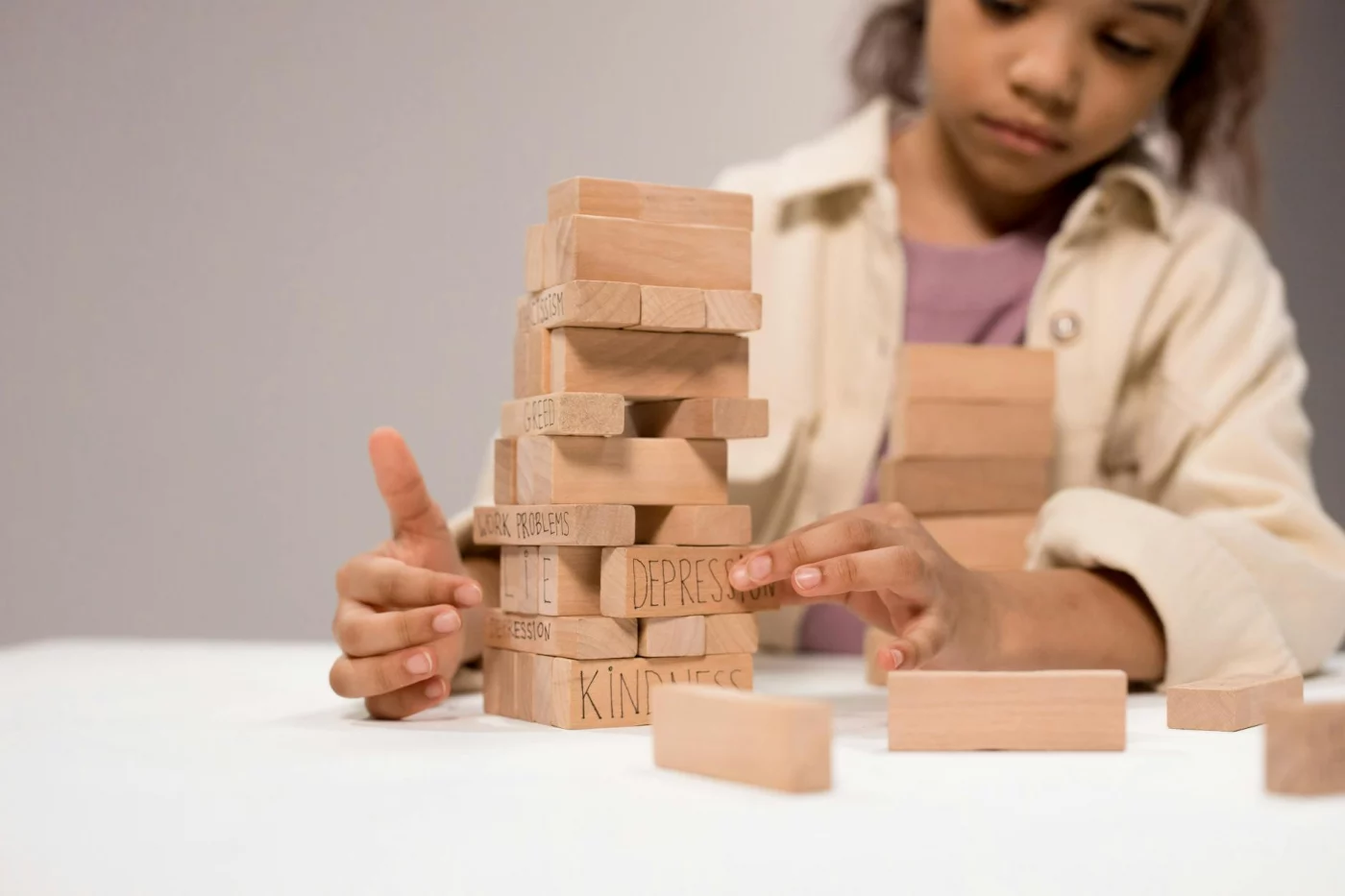
Research from the Harvard Center on the Developing Child and social-emotional learning research suggests that responsive relationships and self-regulation support stronger school adjustment and behavior. And according to the American Academy of Pediatrics, emotional skills grow through warm, steady relationships. This doesn’t erase tantrums, anxiety, or developmental differences. It gives children tools, not perfection.
How it helps at home and at school
At home, emotional skills can mean fewer bedtime blowups, less homework gridlock, and better repair after sibling fights. At school, they support turn-taking, frustration tolerance, and classroom emotional learning during group work. Need age-specific context? See children’s emotional needs by age.
The long-term payoff
A child who can say “I’m overwhelmed” is easier to support than one who can only yell or shut down. That’s one reason emotionally skilled kids often build resilience in children more effectively after mistakes, peer conflict, and disappointment. Speaking of which — these skills also support empathy, problem-solving, healthy boundaries, and self-control in children.
Quick answer: why it matters
📋 Quick Reference
- Better behavior: more pause, less impulsive reacting
- Stronger relationships: smoother conflict repair and clearer communication
- Improved learning readiness: better focus, participation, and group work
- Healthier coping: more accurate help-seeking and faster stress recovery
So that’s why emotional intelligence matters. Next, we’ll get practical and walk through six clear steps to build these skills.
6 steps to build these skills
So now the practical question: if develop emotional intelligence in children matters so much, what do you actually do in the moment? Here’s a repeatable routine for tantrums, homework frustration, friendship blowups, or classroom upset—and yes, this is a big part of why is it important to develop emotional intelligence.
How to use the 6-step routine
- Step 1: Notice cues and pause
- Step 2: Name the feeling
- Step 3: Validate the emotion
- Step 4: Calm the body
- Step 5: Problem-solve
- Step 6: Practice when calm
Step 1: Notice cues and pause
Before correcting behavior, scan for signals: clenched jaw, hiding, whining, sudden silliness, door slamming, a sharp voice, or moving too fast. That pause is the heart of emotion coaching. Parent phrase: “Your face looks tight and your fists are clenched. Something feels hard right now.” Teacher phrase: “I notice your voice got louder and you pushed your paper away. Let’s pause first.”
Steps 2–4: Name, validate, and calm
Step 2 is labeling emotions with specific words: frustrated, left out, worried, embarrassed, disappointed. Parent: “You seem disappointed the game ended.” Teacher: “It looks like you’re feeling overwhelmed by this assignment.” Research summarized by the American Psychological Association on children and emotions supports helping kids build emotional language.
Step 3: validate without giving in. “You’re angry that the game ended. I won’t let you hit.” Teacher version: “You’re upset your partner took the marker. I won’t let you grab.” That balance matters because feelings are always real, but behavior still needs limits—something that connects closely with why children need boundaries.
Step 4: calm the body. Try one tool, not ten:
- 3 slow breaths
- a sip of water
- wall pushes or a short walk
- a sensory break or quiet corner
Parent: “Let’s get your body calmer first.” Teacher: “Choose breathing or the calm spot.” CDC guidance on structure and rules supports calm, consistent, predictable responses.
Steps 5–6: Problem-solve and practice
Step 5 comes after calm: “What could help next time?” Offer two realistic choices. Parent: “Next time, do you want help starting or a 2-minute break first?” Teacher: “Would you like to use sentence starters or switch seats?”
Step 6 is where many families miss the real growth. Practice in calm moments—3 minutes in the car, at bedtime, or during morning meeting—with stories, role-play, and repair after conflict. Parent: “What can you say if your brother grabs your toy?” Teacher: “Let’s rehearse what to do when you feel stuck.” For more scripts, try these tips to develop kids’ emotional skills, and the next section breaks down children’s emotional needs by age so you can adjust this routine for toddlers, school-age kids, and teens. That’s also why is it important to develop emotional intelligence early: practice works best when it’s repeated in everyday life.
Age-by-age help at home and school
Those 6 steps work best when you match them to development. If you’re wondering why is it important to develop emotional intelligence, this is the practical answer: kids use these skills differently at 3, 7, and 15.

According to CDC Learn the Signs. Act Early. and Zero to Three, children vary, but emotional skills grow in predictable stages.
Ages 2–4: Borrow your calm
Realistic goal? Co-regulation, not self-control. At home and in class, use routines, pictures, and 2-3 feeling words; for more developmental context, see children’s emotional needs by age. Script: “You’re mad. I’m here. Stomping feet goes on the floor, not on people.”
Ages 5–8: Build language and repair
Now kids can name feelings, retell what happened, and practice repair. Use an emotion chart, books, and role-play after conflict; in classrooms, model apology plus action: “What can you do to help fix it?”
Ages 9–12 and teens: Reflect, plan, reset
Older kids can track triggers and notice social dynamics. Teens usually respond better to collaboration than lectures, so try: “Do you want help, space, or both?” That’s a big part of how to teach emotional intelligence to teens.
Real-World Application
- Homework frustration: toddler gets a break; 7-year-old retries; teen makes a plan. Don’t say, “It’s easy.”
- Sibling conflict: little kids need adult coaching; older kids can reflect after. Don’t say, “Go work it out” when they’re flooded.
- Friendship exclusion: for teens, ask before advising. Don’t say, “Just ignore it,” especially with group-chat drama.
Think school drop-off tears, losing a game, bedtime overwhelm, or grocery store meltdowns. If your child needs more practice ideas, these tips to develop kids’ emotional skills can help at home and in the classroom. Next, let’s cover tools, common mistakes, and when extra support makes sense.
Tools, mistakes, and when to get help
Once you’ve matched support to your child’s age, the next question is practical: what actually helps day to day? If you’re still wondering why it matters to develop emotional intelligence in children, this is where it shows up most clearly—at bedtime, during homework, and in the school drop-off line.
Simple tools that actually help
Keep tools light. An emotion chart for kids printable works well for toddlers and preschoolers who need visual choices, while older kids often do better with short reflection sheets, journals, or optional emotional intelligence for kids worksheets they can fill out in two minutes, not twenty.
Role-play cards help with social problem-solving: “What could you say if a friend cuts in line?” In classrooms, quick check-ins with a feelings wheel can spot stress early. And yes, teaching emotional intelligence activities should feel supportive, not like extra homework.
Common mistakes to avoid
- Instead of “Calm down,” try “I’m staying with you. Let’s slow your body first.”
- Instead of demanding an apology mid-meltdown, wait until your child is regulated.
- Instead of “bad attitude,” name what you see: frustration, disappointment, embarrassment.
- Instead of dismissing feelings, validate them without giving in to hurtful behavior.
- Instead of expecting adult-level self-control in children, aim for practice and support.
When extra support makes sense
Big feelings are normal. Persistent patterns that disrupt daily life are different. If you notice ongoing aggression, extreme withdrawal, intense distress that doesn’t ease, frequent school refusal, major friendship problems, or trouble functioning across home and school, it’s wise to talk with a pediatrician, school counselor, licensed therapist, or developmental specialist.
Quick Reference and next steps
📋 Quick Reference
- Notice the cue.
- Name the feeling.
- Validate it.
- Calm the body first.
- Problem-solve later.
That’s how to increase a child’s emotional intelligence without overwhelming them. And really, that’s why is it important to develop emotional intelligence: kids learn to understand feelings, manage behavior, and ask for help when they need it. Pick one routine this week, then browse our Emotional Wellness and Parenting hubs before you head into the FAQ.
Frequently Asked Questions
How do children develop emotional intelligence?
Co-regulation comes first. Before kids can calm themselves, they borrow calm from a steady adult through tone of voice, routines, and repeated support in hard moments. When parents and teachers wonder how do children develop emotional intelligence, the short answer is this: through relationships, modeling, feeling words, and lots of practice over time — then, with age and support, they gradually handle more of it on their own.

Why is it important to develop emotional intelligence in children?
Why is it important to develop emotional intelligence in children? Because it helps with behavior, learning, friendships, and coping when life feels big. Kids who can notice feelings, express needs, and recover after disappointment often have an easier time with school routines and peer conflict — but emotional intelligence doesn’t make a child perfectly calm, obedient, or easy every day, and that’s a helpful thing to remember.
How can I improve my child’s emotional intelligence at home?
If you’re looking for how to improve children’s emotional intelligence at home, start small and stay consistent: try a daily check-in, name feelings out loud, model calm when you’re frustrated, and talk through solutions after everyone has settled. One simple routine is enough to begin — an after-school “high, low, and what helped” chat or a bedtime reflection can build emotional language without making it feel like a lesson.
How do you teach emotional intelligence to preschoolers?
How to teach emotional intelligence to preschoolers usually looks simple on the surface: short phrases like “mad body, safe hands,” picture charts, pretend play, and lots of adult help calming down. Preschoolers aren’t supposed to manage big feelings alone, so keep expectations realistic, repeat the same language often, and use co-regulation as the main tool rather than expecting instant self-control.
How do you teach emotional intelligence to teens?
How to teach emotional intelligence to teens works better through respectful conversation than lectures. Try collaborative problem-solving, private reflection, and specific language for stress, boundaries, and repair in friendships — for example, “What were you feeling then?” or “What would a repair text sound like?” For many families, being curious helps more than pushing.
What are 7 signs of low emotional intelligence in children?
When people ask what are 7 signs of low emotional intelligence, common signs may include trouble naming feelings, frequent blaming, low frustration tolerance, difficulty reading social cues, impulsive reactions, limited empathy, and trouble repairing conflict after an argument. But wait — these signs can also show up during stress, certain developmental stages, or other emotional and learning challenges, so if the pattern is intense or persistent, it’s wise to talk with a pediatrician, school counselor, or licensed mental health professional. For broader support ideas, you can also browse Emotional Wellness.
What are the 3 C’s of emotional intelligence?
There isn’t one universal definition of what are the 3 c’s of emotional intelligence, so it’s best to treat any version as a teaching tool, not a clinical rule. A practical family-friendly model is calm, connect, and choose: first calm the body, then connect with the feeling or person, then choose the next helpful action. That’s one reason why is it important to develop emotional intelligence early — kids need a simple path they can use in real moments, not just big ideas.
What are the 4 R’s of emotional intelligence?
Frameworks vary, but one useful answer to what are the 4 r’s of emotional intelligence is recognize, regulate, relate, and repair. Recognize means noticing “I’m overwhelmed,” regulate might be taking breaths or a movement break, relate could be seeing that a classmate looks hurt, and repair means apologizing or trying again after conflict. Research-backed groups like the Center on the Developing Child at Harvard University emphasize that these skills grow through supportive relationships and repeated practice, not pressure or perfection.
Conclusion
If you want to help children build emotional intelligence, start small and stay consistent. Name feelings out loud, model calm repair after hard moments, use simple routines like check-ins or feeling charts, and coach problem-solving instead of rushing straight to punishment or rescue. Those four habits do a lot of heavy lifting. And they work at home, in classrooms, and even in those messy in-between moments like school drop-off, homework time, or bedtime.
Thing is, emotional skills don’t grow overnight. They grow through repetition, safety, and relationships. For many families, some days will feel smooth and some will feel like everyone forgot every coping skill at once. That doesn’t mean it isn’t working. It means your child is learning. And if you’ve been wondering why is it important to develop emotional intelligence, here’s the heart of it: these skills help children handle frustration, build friendships, communicate needs, and recover from setbacks with more confidence over time.
For more practical support, explore our Child Development and Emotional Wellness hubs on EducatorsSupport.com, where you’ll find age-by-age guidance, everyday parenting tools, and school-friendly strategies you can use this week. Pick one step, try it today, and keep going — that’s how strong emotional intelligence gets built.


