

If you are a parent comparing fine motor skills vs gross motor skills, you may want simple activities that fit your child rather than another milestone checklist. This guide helps you separate the movements within everyday tasks and choose practical ways to rehearse specific hand actions.
You will be able to pick one action, match materials to the child, adjust the challenge, and follow a flexible practice plan. The activities are opportunities to try movements such as placing, turning, fastening, drawing, and cutting. They are not tests or guaranteed interventions.
Contents
Fine and Gross Motor Skills in Daily Life
Sort each task by the movement you can see. On this page, “fine motor” is a practical label for smaller hand and finger actions. “Gross motor” is a practical label for larger arm, leg, or whole-body actions.
| Daily situation | Fine motor action | Gross motor action |
|---|---|---|
| Getting dressed | Holding fabric or pulling a fastener | Moving an arm into a sleeve or a leg into trousers |
| Eating | Holding a spoon or opening a container | Carrying a tray or moving into a seat |
| Playing | Placing a small block or turning a puzzle piece | Pushing a large box or stepping over a cushion |
| Using books and paper | Turning a page, making a mark, or holding paper | Collecting materials or moving them to a work area |
A task can contain both kinds of movement. You do not need to force it into one category. Instead, name the exact part the child wants or needs to do.
A 2017 study involving 225 preschool children reported as aged 5 years 9 months used a parent questionnaire and assessments to examine links between motor activities, fine motor performance, and vocabulary. The record reports associations; it does not establish that any activity on this page causes improvement.
If the child needs larger-movement ideas, use these gross motor activities for active play alongside, rather than instead of, hand-based tasks.
Choose Activities That Match the Child
Begin with a real action the child wants or needs to complete. Watch the task once before choosing materials. A broader guide to child development can help you consider communication, movement, attention, and the child’s surroundings together.
Do not copy a specialist program simply because it includes hand activities. For example, a 12-week telerehabilitation paper involving children with inattentive ADHD concerns a specific population and structured format. It does not provide general activity or referral rules for every child.
Pick one skill
Name one observable action. Choose “turn the lid,” “pull the zipper tab,” or “place the puzzle piece” rather than the broad goal “improve hand skills.” This gives you a clear action to offer again.
For example, hold a lunch container steady while the child turns its loosened lid. A complete routine can contain several difficult steps, so do not change the container, seating, instructions, and time pressure together.
If turning does not work, loosen the lid further or offer a container with a larger handle. You can also complete the opening while the child practices the final turn.
Match materials to age
Use materials that fit the child’s safety needs and current way of handling objects. Follow product age guidance and supervise activities as the materials require. Treat an age label as a safety instruction, not proof that the task suits a particular child.
For a toddler, you might offer large fabric squares and an open tub instead of loose beads. An older child who safely manages smaller objects might choose lacing pieces, paper clips, or counters.
If the first material is unsuitable, use a larger, lighter, or fixed version. Board-book flaps, wide containers, and large interlocking blocks provide alternatives without requiring loose small parts.
Adjust the challenge
Change one feature at a time. You can alter the object’s size, the resistance, the number of steps, the amount of help, or the position of the materials. Keep everything else familiar while you see what happens.
For a peg activity, hold the card steady before changing to a stiffer peg. For a lid, begin with it partly loosened before asking the child to start the whole turn.
If the new version stops participation, return to the previous setup. You can model the action once, begin it for the child, or complete it together without turning the attempt into a test.
Age-by-Age Fine Motor Activity Menu
Choose from the child’s current interests and safe materials, not from an age-based expectation. These fine motor skills activities for kids provide opportunities to perform the actions described. They are not claims that a particular activity develops a named ability.
The groups below are starting points for selecting materials. For more options, see these fine motor activities organized by skill and age.
Toddlers and children using larger materials
When choosing fine motor skills activities for toddlers, use simple setups with pieces that meet the product’s safety guidance. Stay close enough to manage spills and materials.
- Large-object posting: Place large fabric squares or suitable blocks into an open tub. Use a wider, lidless container if the opening causes difficulty.
- Sticker placement: Lift one corner of a large reusable sticker for the child to grasp and place. Try a folded tape tab if peeling is not workable.
- Scoop and pour: Move water between wide plastic cups at a sink or suitable play area. Begin with an empty receiving bowl if pouring between cups is too demanding.
- Chunky puzzle play: Put the pieces beside their spaces. If replacing them is difficult, place them loosely in position and invite the child to remove them.
- Board-book actions: Turn pages or open sturdy flaps. Separate the next page slightly when the pages are hard to grasp.
Preschool children and children ready for more steps
Fine motor skills activities for preschoolers can contain more steps, but they should still match the individual child. Offer an easier version whenever the full activity is not workable.
- Peg matching: Attach clothes pegs or clothespins to the edge of a sturdy card. Use springless clips or open the peg together as a fallback.
- Threading: Place large pasta tubes or purpose-made beads onto suitable cord. Stiffen the cord’s end or begin with a short piece when needed.
- Paper collage: Tear or place paper pieces, then add paste if the child accepts it. Reusable stickers provide a less complicated alternative.
- Dough actions: Roll, pinch, flatten, or cut suitable modeling dough. Offer one action and one tool rather than a crowded selection.
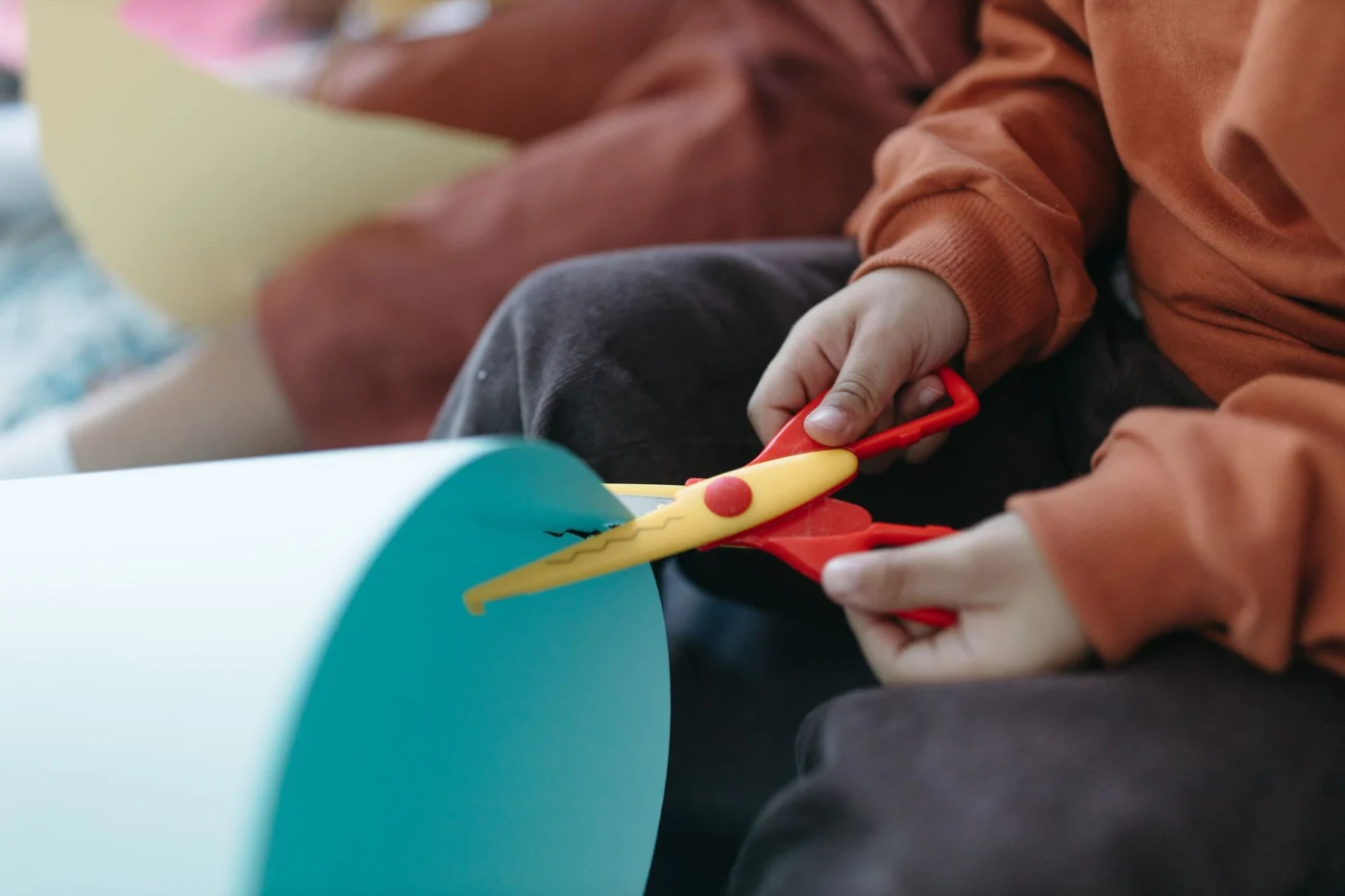
- Paper snips: Use child-safe scissors according to the manufacturer’s guidance. Begin with one prepared paper strip rather than a detailed shape.
School-age children and children using detailed materials
Older children may prefer activities connected to hobbies, school materials, or practical routines. Avoid presenting simpler alternatives as babyish; describe them as different setups for the same action.
- Lacing cards: Pull a lace through prepared holes. Begin with fewer holes or a shorter lace.
- Sorting: Move suitable counters, cards, or craft pieces into labelled containers. Reduce the number of categories if the rules distract from handling the objects.
- Scissor crafts: Cut straight strips before moving to curves or detailed outlines. Provide prepared pieces when cutting is not the child’s chosen part of the project.
- Construction: Copy or invent a design with interlocking blocks. Use larger blocks or start with a partly completed model.
- Paper folding: Fold a simple shape from a marked sheet. Make the first crease together if aligning the paper is not workable.
- Geoboard patterns: Copy a simple line or shape on a purpose-made geoboard. Follow its age and safety guidance, and offer fewer bands when needed.
Common Setup Mistakes to Avoid
Make the setup clear before making the task harder. A child cannot show you much about one action when the workspace, materials, and instructions keep changing.
- Avoid targeting everything at once. Pick one action, such as pulling, turning, or placing. Save speed, neatness, and independence for separate decisions.
- Avoid unsuitable materials. Check product guidance and the child’s usual handling of objects. Replace questionable pieces with larger or fixed alternatives.
- Avoid an overcrowded workspace. Put out the item being used and one receiving container. Keep unused pieces nearby but out of the immediate work area.
- Avoid changing several features together. If you use a smaller object, keep the instructions and position familiar. Otherwise, you will not know which change affected participation.
- Avoid completing every step for the child. Hold the container, start the fastener, or present the next piece. Leave the chosen action available whenever possible.
- Avoid judging only the finished product. Notice what the child actually did, what help you provided, and where the activity stopped.
- Avoid turning optional play into a test. Offer a choice, accept refusal, and return to the activity another time or in another form.
7-Day Practice Plan and When to Ask for Help
Keep the same chosen action across the plan. For example, if the action is turning a lunch-container lid, use the same container and note whether the child turns the final part independently, with the container held steady, or with help. This schedule organizes repeated opportunities; it does not predict or guarantee developmental change. If a daily attempt creates pressure or the child declines, pause and offer the familiar activity another time rather than requiring practice.
The 7-day practice plan
| Day | What to do | Fallback |
|---|---|---|
| Day 1 | Offer a familiar task once and note the exact action the child attempts. | Complete the routine without requiring an attempt, then choose a smaller part for the next day. |
| Day 2 | Offer an easier setup by stabilizing the object or beginning the movement. | Use a larger handle, wider opening, or more familiar material. |
| Day 3 | Repeat the same setup so the materials and instructions remain familiar. | Model once or complete the action together. |
| Day 4 | Change one feature, such as the resistance, object size, or amount of help. | Return to the previous setup if the change stops participation. |
| Day 5 | Offer the action within a daily routine, such as dressing, eating, or packing. | Use the separate play version if the routine has too many steps. |
| Day 6 | Let the child choose between two suitable materials requiring the same action. | Offer the familiar option alone if choosing becomes another barrier. |
| Day 7 | Repeat the preferred version and compare your notes from the week. | Pause the plan if it has not answered your question, and seek individual guidance. |
When to ask for help
Ask for help when a general activity list does not answer your practical question. For example, ask the child’s usual healthcare or school contact how to adapt a lunch container when holding it steady and using a larger-handled version still do not make the opening manageable. A general page cannot assess a child, diagnose a condition, or recommend equipment for an individual child.
Bring brief notes: the exact task, materials, action attempted, help provided, and the child’s response across more than one opportunity. If your usual contact is unavailable or cannot answer the question, ask that service which local healthcare, school, or community route is appropriate; referral routes differ between countries.
If your concern involves an injury or another medical issue, contact an appropriate local healthcare service rather than relying on this plan. If there is no injury but the week’s notes do not clarify what to try next, stop changing the setup and use those notes to seek individual guidance. These activities cannot assess or diagnose a child.
Frequently Asked Questions
Use these answers to choose a next step without treating age or diagnosis as an activity prescription. The most suitable option depends on the child, the task, the materials, and the support available.
What are fine motor activities for kids?
On this page, fine motor activities are tasks arranged around observable hand and finger actions. Examples include turning a lid, placing a block, pulling a fastener, making marks, threading, folding, and cutting suitable materials.
Choose the action first and then select an activity that contains it. Do not assume that completing a craft proves a broader developmental change.
What are good toddler fine motor activities?
Suitable toddler options include turning board-book pages, posting large objects into a tub, placing large reusable stickers, using chunky puzzles, and pouring between wide cups. Follow product guidance and supervise the materials.
If an activity has unsuitable pieces or too many steps, replace it with a larger or simpler version. The child can also remove objects before being asked to place them.
What might a 3-year-old do with hand skills?
This evidence ledger does not support a checklist of hand abilities that every child should show at that age. Instead, you can offer page turning, mark making, stacking, simple posting, dough play, and help with familiar fasteners, then observe what the child does.
Do not use one attempt as a pass-or-fail judgment. For a broader approach, read about understanding child development milestones and discuss individual concerns with an appropriate local contact.
How can I help a 5-year-old build hand control?
Choose a useful action from the child’s day and create an easier version. If the goal is opening a bag, hold it steady while the child pulls the tab. If the goal is cutting, begin with a prepared paper strip.
Change only one feature when you adjust the task. If the child cannot take part in that version, return to the previous setup or complete the action together.
Which everyday fine motor skills matter most?
There is no universal ranking. Start with actions that affect the child’s participation at home, school, or in the community. These might involve eating, dressing, opening personal items, using books, handling preferred play materials, or operating everyday controls.
Ask the child and other caregivers which task would make the most practical difference. Break that task into steps and select one hand action to address first.
What activities help children with autism?
The supplied evidence contains no autism-specific support for claiming that one named activity helps autistic children or children with autism. Do not choose an activity solely from the diagnosis.
Ask which materials, instructions, and ways of taking part the child accepts. Offer equivalent choices without claiming they are autism treatments. For example, replace sticky collage materials with reusable paper pieces, or noisy clips with a quieter placing activity.
Do not assume that every autistic child has the same preferences. If you need individualized recommendations, share observations with a healthcare or education professional who knows the child and local support options.
Keep Practice Playful and Watch Patterns Over Time
Make the activity playful when the child welcomes that format. Offer choices, use a familiar interest, and allow the child to stop. This is a respectful way to organize participation, not a claim that play works better than every other approach.
Watch patterns across repeated opportunities rather than judging one result. Try to keep the task comparable while recording what changed.
- Write down the task and exact hand action.
- Record the materials and their position.
- Note what help you gave.
- Describe what the child did without labels such as lazy or careless.
- Record whether the child wanted to continue, change the activity, or stop.
- Choose one adjustment for the next attempt.
Your notes can help you decide whether to repeat, simplify, replace, or discuss the activity with someone who knows the child. They cannot provide a diagnosis, but they can make your question clearer.
The useful distinction is practical: identify whether a task involves mainly hand and finger actions, larger body movements, or both. Then choose one observable action, provide suitable materials, and change only one part of the challenge at a time.
Use the activity menu and practice plan as flexible options, not tests. Respect the child’s response, record patterns across repeated opportunities, and seek individual guidance when general adaptations do not answer your concern.
This article is general information for parents and caregivers and is not medical advice. For any concern about a specific child, speak with a qualified health professional.


