

Why do people like Eurovision? Common reasons include the mix of songs, languages, costumes, live staging, suspense, and the chance to share one event with viewers in many countries. For a child, the simplest accurate explanation is: “Eurovision is a live music contest where participating public broadcasters enter songs representing their countries, and jury and audience points decide the result.”
The Eurovision Song Contest is organized by the European Broadcasting Union with participating public service broadcasters. The EBU’s 70th-anniversary overview traces the contest to 1956 and describes the 2026 edition as a live event involving broadcasters from Europe and beyond.
Editorial disclosure: Educators Support uses an automated research, drafting, and verification workflow. This article provides general educational information and does not imply human or clinical review.
What Eurovision Is and Why People Watch
Eurovision combines several kinds of entertainment in one broadcast: original songs, live vocals, choreography, costumes, lighting, cameras, a scoreboard, and audience participation. A child may care about the flags or stage effects; another may focus on melody, language, competition, or a family tradition. “People like different parts of it” is more accurate than claiming one universal reason.
A one-sentence child explanation
If that answers the question, stop there. Add the semifinals, voting system, or history only when the child asks. The contest is not a test of whether one country or culture is “better”; it is a competition among entries in a particular broadcast event.
Common reasons viewers enjoy it
- Music variety: entries can sound and look very different from one another.
- Live spectacle: staging, costumes, choreography, lighting, and camera choices become part of each performance.
- Suspense: semifinals and point announcements create a clear sequence and an uncertain result.
- Shared participation: families and friends can compare favorites, make scorecards, or follow countries on a map.
- Tradition and memory: a long-running annual event can become part of a household or community routine.

Verified 2026 format snapshot
The 70th contest took place in Vienna on 12, 14, and 16 May 2026. The EBU’s official participant and format announcement recorded 35 competing broadcasters: 30 entries were divided between two semifinals, and 10 qualified from each. They joined five prequalified entries for a 25-song Grand Final.
| Part | 2026 fact | Child-friendly wording |
|---|---|---|
| Semifinals | Two shows with 15 competing entries in each; 10 from each qualified. | “Two earlier shows choose 20 songs for the final.” |
| Prequalified entries | Austria, France, Germany, Italy, and the United Kingdom. | “Five songs already had places in the final.” |
| Grand Final | 25 entries competed on 16 May. | “The final had the 20 qualifiers plus five songs already placed there.” |
| Result | Jury and audience scores were combined. | “Music professionals and viewers both helped decide the result.” |
This is a dated snapshot, not a promise about a later edition. Eurovision reviews its format and voting rules, so families and educators should check the official contest or EBU pages before presenting yearly details as permanent.
How the Contest and Voting Work
Use the fewest rules needed to answer the child’s question. A school-age explanation can stop after the five steps below; older children may want to know why the jury and audience scores differ or why some entries start in the final.
A five-step explanation sequence
- Broadcasters enter songs. Participating EBU Member broadcasters select an artist and song representing their country.
- Most entries begin in a semifinal. The field is divided between two live shows.
- Qualifiers join prequalified entries. The highest-scoring semifinal entries move to the Grand Final.
- Juries and audiences award points. Their rankings become Eurovision point sets, including the familiar maximum of 12 points.
- The combined total decides the winner. The top total after all points are added wins that edition.
The EBU’s voting format gives each jury and audience ranking points from 1 through 8, then 10 and 12. The details behind valid votes, payment methods, substitute results, and eligibility are adult-level rules; use the official on-screen instructions rather than asking a child to manage them.
What changed in 2026 voting
The EBU’s official 2026 voting update made several material changes:
- Professional juries returned to the semifinals for the first time since 2022.
- Both the semifinals and Grand Final used a roughly half-jury, half-audience balance. With the Rest of the World audience allocation, the EBU calculated the precise split as 50.7% audience and 49.3% juries.
- Each national jury expanded from five to seven people, including at least two jurors aged 18–25.
- The maximum number of audience votes per payment method—online, SMS, or phone—fell from 20 to 10.
That means older descriptions saying the semifinals were decided entirely by the public, that every jury had five members, or that the 2026 limit was 20 votes are outdated. A child does not need these numbers unless they are curious; “both professionals and viewers helped choose the qualifiers and winner in 2026” is enough.
The Big Five and the 2026 exception
The Big Five label refers to France, Germany, Italy, Spain, and the United Kingdom. The EBU’s 2025 semifinal announcement names those five and confirms their automatic Grand Final qualification when participating.
Do not confuse that historic label with the five prequalified entries in 2026. Spain was not on the official 2026 participant list. The five prequalified 2026 entries were host and 2025 winner Austria plus France, Germany, Italy, and the United Kingdom. A precise child-friendly answer is: “The Big Five is the name of five regular automatic qualifiers, but one of them did not enter in 2026, so the host and four of those countries were already in that year’s final.”
The official sources used here verify who the Big Five are and that they prequalify; this guide does not substitute an unsourced one-line funding explanation for the contest’s full participation arrangements.
Eurovision glossary for families
- Entry
- The song and performance entered by a participating broadcaster.
- Semifinal
- One of the qualifying shows held before the Grand Final.
- Grand Final
- The show in which the finalists compete and the winner is decided.
- Jury
- A national panel of music-related professionals whose ranking becomes one set of points.
- Audience vote
- Valid viewer votes converted into a separate set of points under the official rules.
- Rest of the World
- An eligible online audience outside participating countries whose combined points have the weight of one additional voting country.
- Prequalified
- Already placed in the Grand Final without competing for a semifinal qualification spot.
- Big Five
- France, Germany, Italy, Spain, and the United Kingdom—the five broadcasters grouped under this Eurovision label.
- Douze points
- French for “12 points,” the highest value in one Eurovision point set.
- Junior Eurovision
- A separate annual EBU contest for performers aged 9–14, with its own format and voting rules.
Adaptable Scripts by Age Band
These ranges are conversation starters, not developmental rules. Use the child’s language, attention, prior knowledge, and actual question. A short answer is appropriate at any age when it is all the child wants.
Approximately ages 3–5
“Singers from different places are taking turns sharing songs. We can listen to one or two and stop when we want.” Point out a flag, an instrument, a color, or a fast/slow contrast rather than explaining the full scoreboard.
Approximately ages 6–8
“Broadcasters from different countries enter songs. People can have different favorites, and juries and viewers give points.” If a favorite loses: “A score shows how people voted in this contest; it does not tell us which song we are allowed to enjoy.”
Approximately ages 9–12
“Most songs have to qualify through a semifinal. Professionals and viewers rank the songs separately, then their points are added.” Invite media-literacy observations: “How did lighting, costume, camera position, or the running order affect what stood out?”
Teens and older viewers
Discuss how a live broadcast combines music, production, national selection systems, branding, fan communities, voting rules, and public debate. Separate verifiable contest rules from opinions about whether a result was fair. If a claim comes from social media, compare it with the official results or EBU announcement before repeating it.
- “Why are they wearing that?” — “Stage clothes can be part of how a performance tells its story.”
- “That singer looks weird.” — “You can dislike a performance without insulting a person’s body, clothing, accent, country, or identity.”
- “Why is another language being used?” — “Broadcasters and artists make language choices for their entries; we can listen for familiar sounds or read subtitles when available.”
- “Was that vote fair?” — “Let’s separate the official rule from our opinion about the result, then check the published scores.”
Junior Eurovision Is a Separate Contest
Junior Eurovision is not a child-rating or edited version of the main Eurovision broadcast. It is a separate EBU contest with younger performers and its own rules. The EBU’s May 2026 announcement says Malta will host Junior Eurovision 2026 and that performers will be aged 9–14. It describes the event as featuring original musical performances from Europe and beyond.
| Question | Main Eurovision | Junior Eurovision |
|---|---|---|
| Who performs? | Artists selected by participating broadcasters under the main contest rules. | Performers aged 9–14 under the Junior contest rules. |
| Is it the same show? | No; this is the main Eurovision Song Contest. | No; it is a separate annual contest. |
| Does voting work the same way? | The 2026 main contest used the voting system described above. | Do not assume so. Check that Junior edition’s published voting terms. |
| Is either automatically suitable for every child? | No. Preview the current production, timing, sound, lights, themes, and your child’s needs. | |
As of 13 July 2026, the EBU had announced the host and performer age range but said further Junior Eurovision 2026 details would follow. Do not copy the 2025 online-voting procedure into a 2026 explanation until the current terms are published.
A Sensory-Aware Co-Viewing Plan
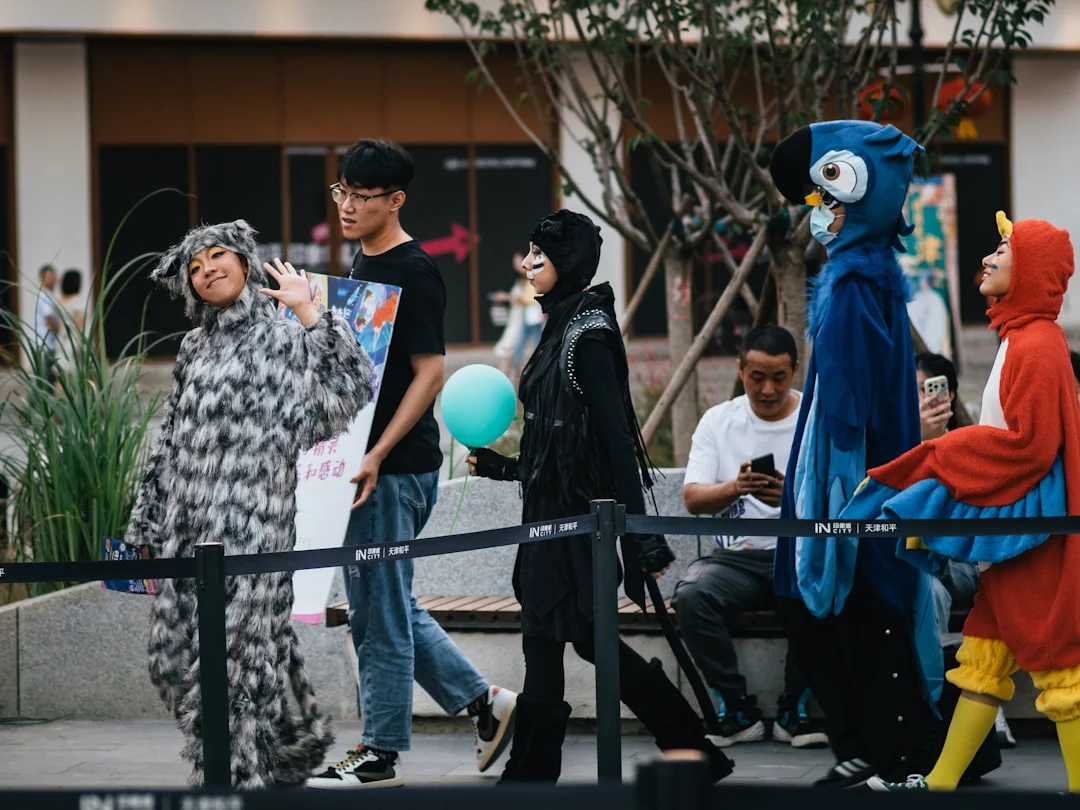
A Eurovision broadcast can include loud music, crowd noise, fast camera changes, bright or flashing stage lights, haze, pyrotechnics, suspense, and a late or long live show depending on location. Those features may be enjoyable, neutral, tiring, or overwhelming. Previewing and an opt-out plan support choice; they do not guarantee a particular reaction.
Before, during, and after
- Choose the version. Decide between live viewing, an official replay, selected clips, or a few previewed performances.
- Preview the sensory features. Mention that sound, lights, costumes, camera movement, and crowd reactions can change quickly.
- Set controls within reach. Adjust volume and room lighting, enable captions when available, offer a comfortable seat or movement option, and keep the exit from the activity easy.
- Use a neutral pause signal. Agree that anyone can ask to pause, mute, skip, or stop without having to defend the choice.
- Debrief lightly. Ask one question such as “Which sound or visual choice stood out?” or “Did your favorite change?” A debrief is optional.
Headphones or hearing protection can help some viewers and bother others; use equipment that is familiar, safe, and comfortable for that person. Do not require a child to tolerate distress for the sake of finishing a family activity. Related support is available in the Emotional Wellness guide and the site’s guide to helping children understand and manage emotions.
Respond without mocking
- Describe what is visible before assigning a motive: “The costume has a long cape,” not “They want attention.”
- Use “I prefer…” or “That part did not work for me” instead of insulting a performer or country.
- Answer the question asked. A child who asks about a flag may not be asking for a political lecture.
- Say when you do not know: “I’m not sure; let’s check the official page after the song.”
- Keep family boundaries specific: “We’re skipping this performance,” without claiming the act is unsuitable for every family.
For broader household media planning, see the screen-time limits and media-use guide and the Parenting hub.
Common Questions
How do you explain Eurovision to a child?
Start with: “Broadcasters from different countries share songs in a live music contest, and juries and viewers give points.” Add semifinals, prequalification, and voting details only when the child asks.
Is Eurovision appropriate for children?
There is no universal answer. Review the current performances or broadcaster guidance, consider timing, lyrics, costumes, sound, lights, live unpredictability, and the individual child. Watching selected clips or stopping early are valid alternatives to the full live show.
How did Eurovision voting work in 2026?
Professional juries and audience voting contributed in both semifinals and the Grand Final. The EBU described the balance as roughly 50/50, with the Rest of the World allocation making the exact overall weighting 50.7% audience and 49.3% juries. The top ten entries from each semifinal qualified, and the combined final total decided the winner.
What is the Big Five rule?
The Big Five label refers to France, Germany, Italy, Spain, and the United Kingdom, whose entries prequalify for the Grand Final when participating. Spain did not participate in 2026, so the five prequalified entries that year were Austria as host and 2025 winner, plus France, Germany, Italy, and the United Kingdom.
Why do people like Eurovision so much?
Different viewers value different parts: songs, languages, performance design, humor, competition, traditions, fan community, or sharing a live event. It is fine for a child—or an adult—not to enjoy it.
What is the difference between Eurovision and Junior Eurovision?
They are separate EBU contests. Junior Eurovision 2026 is for performers aged 9–14 and will be hosted in Malta. Its current voting and participation details should be checked on the official Junior Eurovision or EBU pages rather than copied from the main contest.
Keep the Explanation Simple and Current
Lead with the one-sentence explanation, then follow the child’s question. If they want rules, use the verified 2026 format; if they want to talk about a performance, describe what they noticed; if the production is tiring or uncomfortable, pause or stop.
Year-specific rules can change. Check official Eurovision and EBU information before reusing the 2026 jury size, vote cap, participant count, or prequalified lineup for another edition.


